Great Bird Island & The North Sound Eco Day
Off the north-east tip of Antigua, a scatter of low green islets sits inside a reef in water so calm it barely ripples. There are no roads out here, no bars, no crowds. Just birds, a shallow reef you can wade to, and a rocky ridge with a view over two seas at once.
Explore North Sound mangroves, Great Bird Island and Hell’s Gate with a local boat crew. Discover Eli’s Original Eco Tour
The North Sound is the quiet counterweight to Antigua's beach resorts. Sheltered behind the island's north-east reefs, it holds a cluster of uninhabited islets, mangrove channels and a shallow, glassy lagoon, and the star of it is Great Bird Island: a tiny reef-ringed reserve with nesting seabirds, a short cliff walk and easy snorkeling straight off the sand. It is a nature day, not a party day, and it is one of the most rewarding trips on the island.
Booking Choice: Explore North Sound mangroves, Great Bird Island and Hell’s Gate with a local boat crew. Check Dates: Eli’s Original Eco Tour
The short version: Great Bird Island is a small, uninhabited nature reserve off Antigua's north-east coast, reachable only by boat as part of a North Sound eco trip. Expect nesting seabirds, a short walk to a clifftop view, and calm snorkeling over an inner reef. The wider day usually adds the mangrove keys, the sea cave at Hell's Gate, and a look at the offshore sea-turtle project.
A North Sound eco day, stop by stop
The usual shape of a full-day North Sound cruise. Stops and order vary with the operator and the sea state, so confirm the day's plan when you book.
What Is Great Bird Island?
Great Bird Island is a small, uninhabited islet off the north-east coast of Antigua, protected as a nature reserve inside the sheltered North Sound. With no roads or buildings, you reach it only by boat. Visitors come for the nesting seabirds, a short walk to a clifftop lookout, and calm snorkeling over the reef that rings the beach.
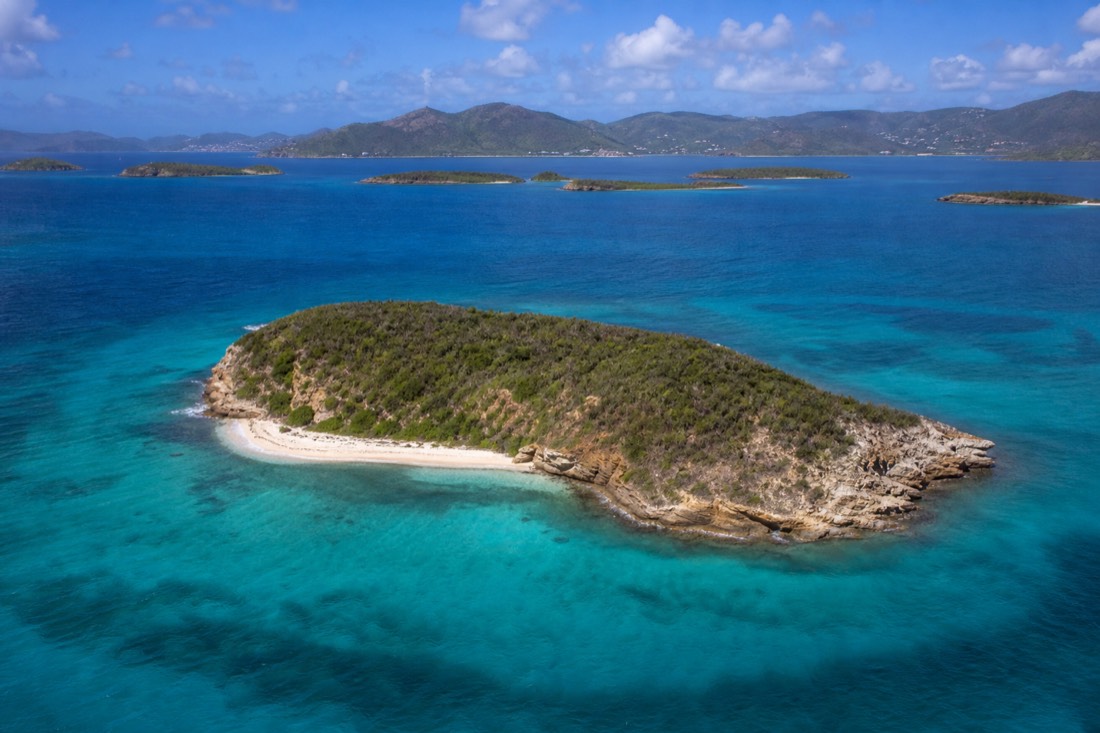
Despite the name, the island is genuinely small, the kind of place you can walk across in a few minutes and around in not many more. That scale is the appeal. You land on a quiet beach, the boat becomes the only sign of the modern world, and a short trail leads up a spine of rock to a lookout over the surrounding reefs and islets. On a clear day it is one of the loveliest low-effort views in Antigua.
Because it is a reserve, the island is undeveloped by design. There is nowhere to buy a drink and no shade beyond what the scrub provides, so everything you need comes off the boat with you. That is exactly why the birds still nest here and the reef is still healthy: keeping the islet roadless and buildingless is what protects it. Our eco operators treat it accordingly, keeping groups to the trails and off the fragile nesting areas.
| Great Bird Island | Detail |
|---|---|
| What it is | Uninhabited islet and nature reserve |
| Where | Off Antigua's north-east coast, in the North Sound |
| Access | Boat only, on a North Sound eco trip |
| Highlights | Seabirds, clifftop walk, inner-reef snorkel |
| Facilities | None; bring water, sun cover and reef-safe sunscreen |
Why Is Great Bird Island A Nature Reserve?
Great Bird Island is protected because it is a refuge for rare wildlife, most famously the Antiguan racer, once called the world's rarest snake. The harmless racer survived here on the offshore islets after being wiped out on the mainland, and a long-running conservation project has since cleared invasive rats and expanded the population across the North Sound. The islet also shelters nesting seabirds and the rare West Indian whistling duck.
The racer's story is why serious conservationists know this small island. The Antiguan racer, a slender, non-venomous snake, was driven to the edge of extinction on the main island by introduced predators, and for decades it clung on only on a handful of offshore islets like this one. A dedicated recovery effort removed the invasive rats and mongooses that were eating the snakes and their prey, and the population has since been nursed back and reintroduced to other rat-free islands in the Sound. It is one of the Caribbean's clearest conservation success stories.
The documented history is worth knowing. By the 1990s the racer had been wiped out across the Antiguan mainland, largely by the mongooses brought in during the sugar era to control rats, and only a few dozen survived, all of them on Great Bird Island. A conservation project launched in the mid-1990s cleared the rats from the islet, then from other keys in the Sound, and carefully reintroduced snakes to those rat-free islands. The population has since multiplied and spread across several islets, which is why the recovery is cited so often as a model for the region.
That is also why the visiting rules matter. Keeping the islets free of stowaway rats is the whole game, so guides ask you not to leave food behind and to stay on the trails away from nesting sites. Alongside the racer, the reserve supports nesting seabirds and the rare West Indian whistling duck, which our eco guides point out on the nature walk. Treating the island gently is not a formality here; it is the reason there is anything to see.
What Birds And Wildlife Live On Great Bird Island?
Great Bird Island is a wildlife refuge first and a beach second. Its flagship resident is the Antiguan racer, the harmless snake the reserve exists to save, and its cliffs and scrub shelter nesting seabirds and the rare West Indian whistling duck. Offshore, stingrays and reef fish work the shallows, so a walk and a snorkel show the full cast.
The birds are the easiest wildlife to notice. The islet's low cliffs and scrub give nesting cover to seabirds, and guides often point out terns and tropicbirds wheeling off the headland, with pelicans and frigatebirds working the wider Sound. In the undergrowth, the reserve is one of the few places you have a genuine chance of spotting the West Indian whistling duck, a shy, rare tree duck that has held on across these protected islets.
The racer is the animal most visitors never see, and that is fine. It is secretive, non-venomous and harmless to people, and it spends its time hunting lizards in the scrub rather than near the beach. What matters is that the ground it needs stays undisturbed, which is why the nature walk keeps to the trails. The table below sums up the land-and-air wildlife you might meet; for the reef fish and rays, see the snorkeling section below.
| Wildlife | What it is | Where and status |
|---|---|---|
| Antiguan racer | Small, non-venomous grey-brown snake | The reserve's flagship species; rare, strictly protected, rarely seen |
| West Indian whistling duck | Shy, rare tree duck | In the islet's scrub; a highlight of the nature walk |
| Nesting seabirds | Terns, tropicbirds and others | On the cliffs and shore; keep to the trails, do not disturb |
| Pelicans and frigatebirds | Larger seabirds | Over the wider North Sound, seen from the boat |
What Is The North Sound?
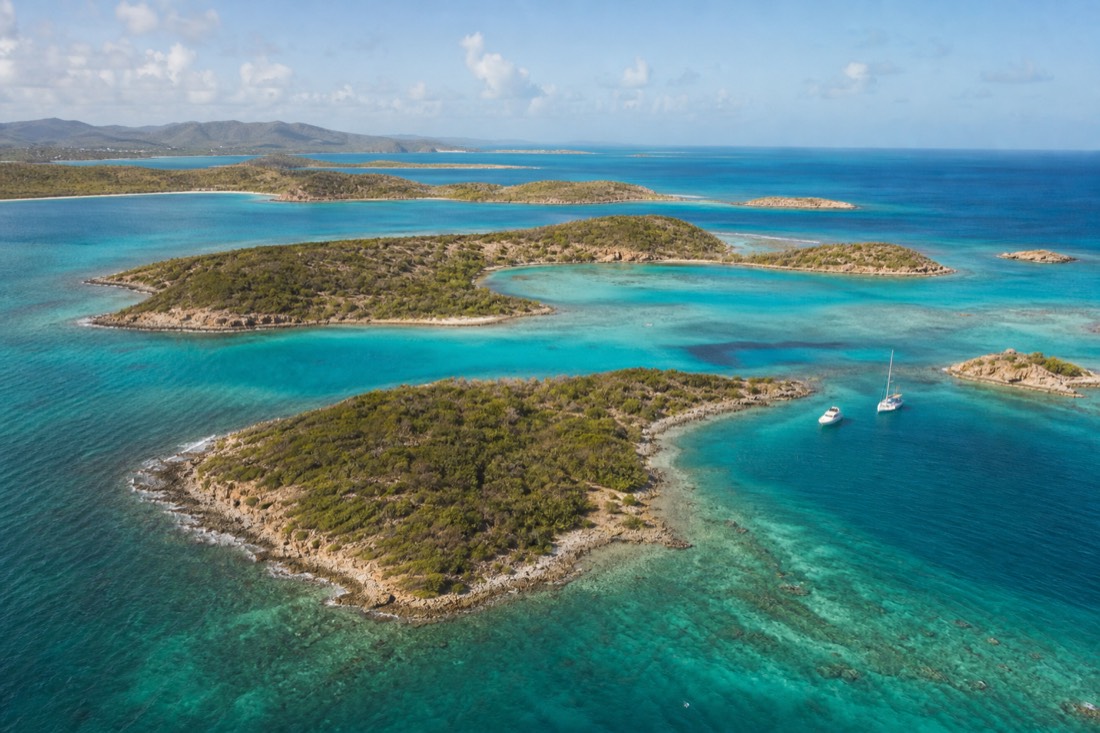
The North Sound is the sheltered stretch of sea off Antigua's north-east coast, a shallow, reef-protected lagoon dotted with small uninhabited islands and mangrove channels. Because the reefs and islets break the Atlantic swell, the water inside stays calm and clear, which makes it ideal for gentle boat trips, snorkeling and wildlife watching. Great Bird Island, Guiana Island, Hell's Gate and other keys all sit within it.
Think of it as a natural marine playground kept calm by geography. The outer reefs take the ocean's energy, so inside the Sound the turquoise flats stay flat, and boats can potter between islets that each offer something different: a beach here, a mangrove channel there, a sea cave on the next headland. It is the opposite of the wild, wave-battered east coast just around the corner, which is what makes a day out here feel so relaxed.
The mangroves are quietly doing important work. As the boat passes islands like Guiana Island, guides point out the dense mangrove root networks that act as nurseries, sheltering juvenile fish and marine life before they move out to the reefs. Those nurseries help keep the whole area's snorkeling as good as it is, which is why Antigua and Barbuda's official tourism board promotes the North Sound and its islets as one of the island's premier nature escapes. For where the North Sound reefs rank among the island's underwater sites, our guide to snorkeling in Antigua lays out the best spots coast by coast.
| North Sound key | What it offers | Access |
|---|---|---|
| Great Bird Island | Reef snorkel, clifftop walk, seabirds, beach lunch | Boat landing; the day's main stop |
| Guiana Island | Mangrove nurseries, wildlife commentary | Cruise-past on the way out |
| Hell's Gate | Sea cave and natural rock arch | Guided climb, sea state permitting |
| Long Island (Jumby Bay) | Long-running sea-turtle project | Offshore briefing stop, no landing |
What Do You Do On A North Sound Eco Day?
A North Sound eco day is a relaxed boat loop through the sheltered islets off the north-east coast. A full-day trip cruises the mangrove nurseries, anchors at Great Bird Island for snorkeling, a nature walk and a beach lunch, then tackles the sea cave at Hell's Gate and the offshore turtle project. Stops vary with the operator and the sea, so confirm the plan when you book.
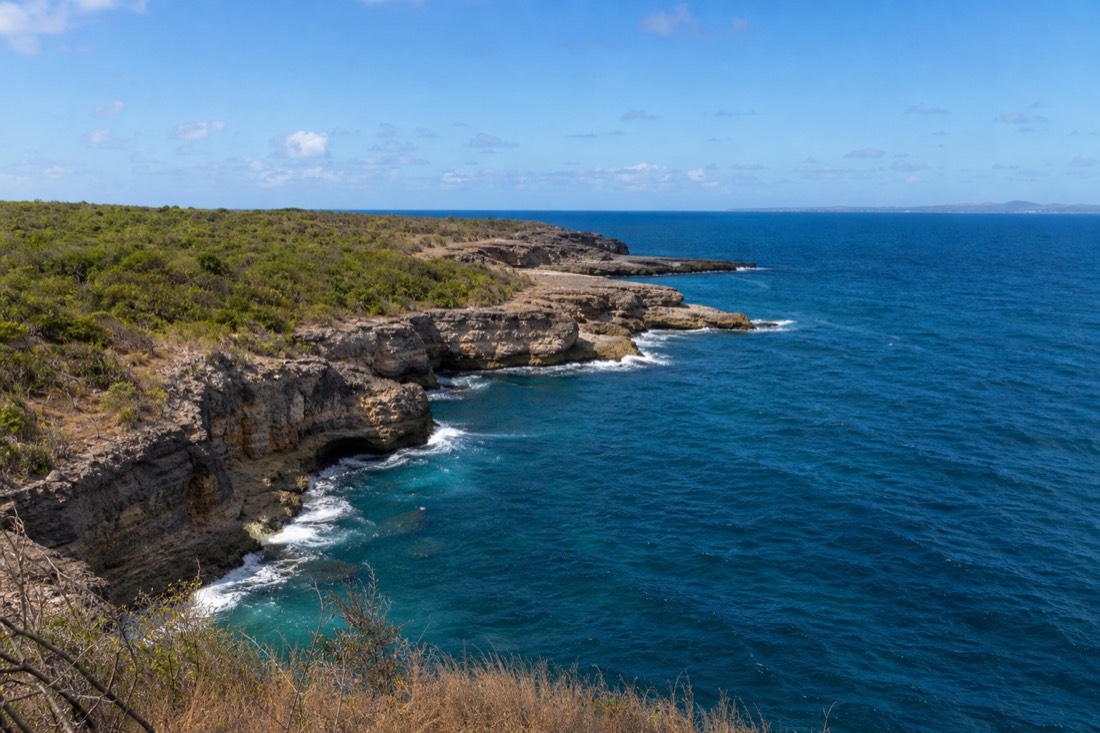
The pace is the point. This is a full-day trip built around slow water and short landings rather than a rush between ticketed sights, and the standard version balances quiet reef swimming and a leisurely lunch with one genuine burst of adventure at the sea cave. Because it is eco-focused, the commentary leans into the wildlife and the ecosystems, so you come away understanding the place, not just photographing it.
Most trips run the loop out of a marina on the west or north side of the island and take the best part of a day, so it is a commitment, but a gentle one. Our operators run this as a classic North Sound cruise with a homemade lunch cooked and served on the beach at Great Bird Island, which is a large part of the charm. The itinerary below is the usual shape of the day.
| Stop | What you do | Roughly |
|---|---|---|
| North Sound cruise | Pass mangrove keys and islets; wildlife commentary | On the way out |
| Great Bird Island | Snorkel the inner reef, nature walk, beach lunch | The longest stop |
| Hell's Gate | Climb the sea cave to the natural rock bridge | A short, active stop |
| Turtle project (offshore) | Learn about the sea-turtle conservation work | A briefing stop |
One honest caveat: the sea-cave climb and the wilder stops depend on the sea state, so a rougher day can trim the itinerary. That is normal and it is a safety call, not a shortcut, so take the crew's lead if a stop is skipped.
What Is Hell's Gate?
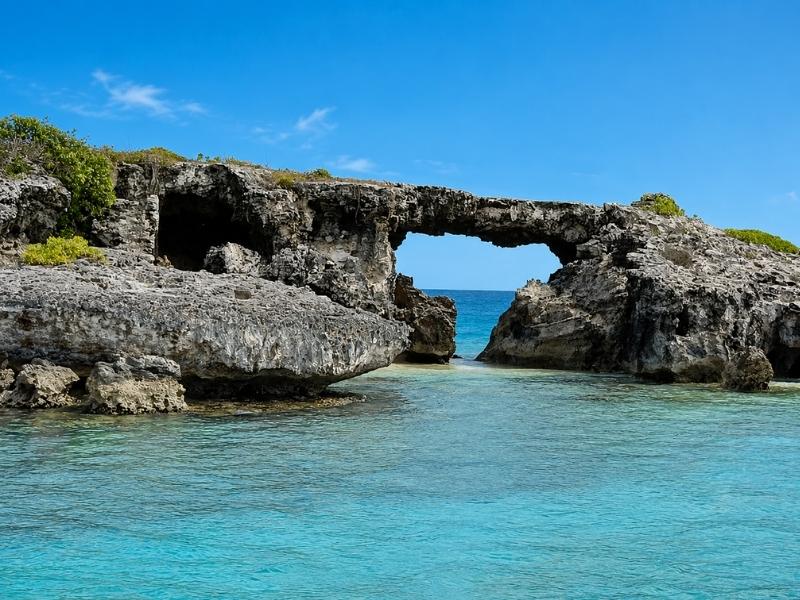
Hell's Gate is a dramatic limestone rock formation in the North Sound, where the sea has carved a cave and a natural arch through a small island. On the eco day you climb through the wet cave and emerge onto a natural rock bridge with a striking contrast underfoot: the wild, crashing Atlantic on one side and the calm, clear Caribbean shallows on the other. It is the adventurous highlight of the trip.
The climb is short but real. Guides lead you through the warm water to the limestone shelf, then up worn, slippery stone steps and through the cave that runs into the heart of the rock, before you scramble out on top of the arch. From up there the geography does something memorable: turn one way and the open ocean is smashing into the cliffs, turn the other and the sheltered Sound lies mirror-flat. Two completely different seas, a few steps apart.
It comes with a safety note worth taking seriously. The rock is weathered, wet and studded with barnacles, so smooth flip-flops are a bad idea here; sturdy strap sandals or reef booties save your feet and your footing. Anyone unsteady on slippery ground can happily sit this one out on the boat and still have a full day, since the cave is the one properly athletic moment in an otherwise gentle trip.
What's The Snorkeling And Marine Life Like?
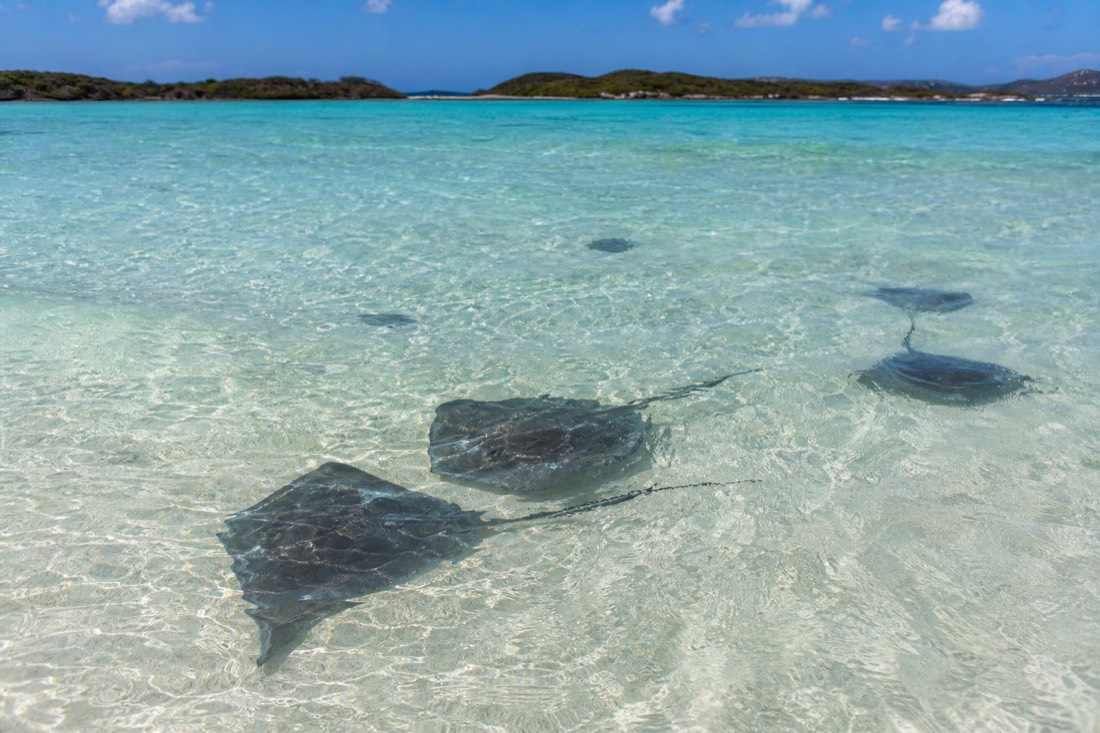
The snorkeling in the North Sound is easy and rewarding. At Great Bird Island you slide in from the beach over a shallow inner reef, where colourful tropical fish move over the coral and wild southern stingrays sometimes cruise the sand flats. Because the water is calm and shallow, it suits beginners, and the eco crews give a snorkeling lesson before you get in, so first-timers are well looked after.
What makes the snorkeling here forgiving is the shelter. The reef sits in protected water close to the beach, so there is no fighting swell or current the way you might on the exposed coast, and the shallow shelf keeps everything within easy reach of the surface. That combination, calm and shallow, is ideal for children and nervous swimmers, and the crew's in-water guidance means you are never far from help.
The life is the reward for getting your face in the water. Expect the usual cast of Caribbean reef fish over the coral heads, and keep an eye on the sandy patches for the resident stingrays that glide through the shallows. It is not the deep-reef spectacle of the barrier reefs off the leeward coast, but as an easy, wade-in snorkel with real wildlife, it is hard to beat. For a fuller wildlife day in these same north-east waters, our things to do in Antigua roundup covers the stingray sandbanks nearby.
| You might see | Where | Note |
|---|---|---|
| Colourful reef fish | Inner reef off Great Bird Island | Wade in from the beach, calm and shallow |
| Southern stingrays | Sandy flats around the islet | Wild, cruising the shallows |
| West Indian whistling ducks | The islet's scrub and shore | Rare; spotted on the nature walk |
| Nesting seabirds | Protected areas of the reserve | Keep to the trails, do not disturb |
| Sea turtles | Around the offshore turtle project | A conservation stop, not a guaranteed swim |
The Sea Turtle Project In The North Sound
The eco day usually includes a stop near a long-running sea-turtle conservation project on Long Island, off Antigua's north coast, where nesting hawksbill and green turtles have been tracked and protected for more than 30 years. It is worth knowing that this Long Island, home to the exclusive Jumby Bay resort, is a different place from the mainland public beach called Long Bay on the island's eastern tip.
The project is one of the Caribbean's most established turtle programmes. For over three decades it has monitored nesting hawksbills and green turtles on the island's beaches, tagging females, protecting nests and building one of the longest continuous datasets on the species anywhere. On the eco trip you do not tramp over the nesting beaches; instead the crew anchors nearby and gives a short briefing on the work, which is the responsible way to include it.
The name clash is a genuine trip-planning trap, so it is worth spelling out. The turtle stop is at Long Island / Jumby Bay in the north, not at the mainland Long Bay beach on the east coast that shows up on the island tours near Devil's Bridge. Two different places, similar names. If turtles and rugged coast both appeal, you can do the calm North Sound day here and pair it another day with the east coast; our Devil's Bridge and east-coast guide covers that side, including the very different Long Bay beach.
How Do You Visit Great Bird Island Responsibly?
The rules are simple, and they are the reason the island is worth visiting. Bring nothing ashore that could carry a stowaway rodent, take your litter back to the boat, keep to the trails away from nesting sites, and use reef-safe sunscreen. A roadless reserve has no bins and no room for error, so each visitor's care adds up.
Rodents are the single biggest threat, which is why the no-food-left-behind habit is not fussiness. The whole racer recovery rests on keeping these islets rat-free, and a dropped sandwich or an unsecured bag is exactly how rats reach a small island in the first place. Good eco crews check their boats and ask you to keep food packed until you are back aboard, and following that quietly protects decades of work.
The rest is ordinary good manners on fragile ground. Stay on the worn paths so you do not trample nesting cover, keep your distance from the birds and the shy racer rather than chasing a photo, and choose a reef-safe sunscreen before you snorkel the inner reef. If you would rather join an operator that already works to these standards, our guided small-group tours of Antigua include the eco cruise with the gear, the lunch and the conservation briefing built in.
| Do this | Why it matters |
|---|---|
| Keep food packed until you are back on the boat | Rats reach islets on scraps; keeping them out is the whole racer recovery |
| Take all litter back with you | A roadless reserve has no bins and no clean-up crew |
| Stay on the trails | Ground-nesting birds and racer habitat are easily trampled |
| Keep your distance from wildlife | Birds, ducks and the shy racer stay wild only if left alone |
| Use reef-safe sunscreen | Protects the inner-reef coral you snorkel over |
How To Plan The Eco Day And What To Bring
North Sound eco trips are full-day outings, usually leaving from a marina on the west or north side and returning in the afternoon. Bring reef-safe sunscreen, a hat, a towel and swimwear, and add sturdy strap sandals or reef booties for the slippery Hell's Gate climb. Confirm your departure point and pickup when you book, since these trips start from a harbour rather than a beach in front of your hotel.
The single most useful thing to pack is proper footwear for the sea cave. The rest is standard boat-day kit, but the Hell's Gate scramble is where flimsy flip-flops let people down, so strap sandals or reef booties are the difference between joining in comfortably and skipping it. Beyond that, think sun: the Sound is open and bright, there is little shade on the islets, and the glare off the pale water is strong, so reef-safe sunscreen and a secure hat earn their place.
Logistics are worth confirming ahead. Because these cruises leave from a working marina, your day starts with getting to the dock rather than strolling off the sand, and departure points differ between operators, so pin down where you are meeting the boat and whether a transfer is included. If you would rather not organise any of it, browse our Antigua tours and book a small-group eco cruise with the pickup, gear and lunch handled. For choosing the calmest, clearest weeks to be on the water, see our guide to the best time to visit Antigua.
| Bring | Why |
|---|---|
| Strap sandals or reef booties | The Hell's Gate cave is wet and slippery |
| Reef-safe sunscreen and a secure hat | Open water, strong glare, little shade |
| Swimwear and a towel | Snorkeling and beach time at Great Bird Island |
| A dry bag for phone and camera | Boat spray and wet landings |
| Cash for tips and extras | Some items are not covered on the boat |
Which Tour Is The North Sound Eco Day?
The classic North Sound eco day is a full-day small-group cruise built around Great Bird Island, with a beach lunch, the mangrove keys, the Hell's Gate sea cave and the turtle-project briefing. To see the whole coast faster, a full-island powerboat passes Great Bird Island on a wider loop, while a land-and-sea tour reaches the nearby stingray sandbanks.
For the eco day itself, the dedicated cruise is the one to book. Our operators run an original eco adventure tour, a 6-hour Adventure Antigua cruise through the North Sound that gives Great Bird Island a long stop for snorkeling, the nature walk and a homemade beach lunch, then adds the Hell's Gate cave climb and the turtle-project stop. It is relaxed, wildlife-led and genuinely educational, and you can check live availability and prices on the operator's listing.
The alternatives suit different appetites. If you want speed and the full 360-degree island rather than a slow North Sound day, the Xtreme circumnavigation powerboat rounds the whole coast, passing Great Bird Island and the mangrove keys on its way to Stingray City, the Pillars of Hercules and a remote beach. And for the stingray sandbanks in these same waters paired with the rugged coast, the small-group stingray tour works the north-east too. Any of them can be booked as a guided Antigua island tour through our team. Before you pick, you might weigh a wilder counterpart: read the Devil's Bridge and east-coast guide, or plan a big evening at the Shirley Heights sunset party.
| Tour | Platform | North Sound coverage | Best for |
|---|---|---|---|
| Original eco adventure | Viator | The dedicated North Sound eco day | Great Bird Island, Hell's Gate, wildlife |
| Xtreme circumnavigation | Viator | Passes Great Bird Island on a full-island loop | Speed and seeing the whole coast |
| Small-group stingray tour | Viator | The north-east stingray sandbanks nearby | Stingrays plus rugged coast and history |