Nelson's Dockyard & English Harbour Guide
English Harbour is where Antigua's naval history still stands. Nelson's Dockyard, often called the only Georgian-era dockyard still in working use, sits restored at the water's edge below the ridges of Shirley Heights.
Visit the Dockyard, Shirley Heights and Blockhouse, then spend an hour at Pigeon Point Beach. Discover Dockyard History And Pigeon Point
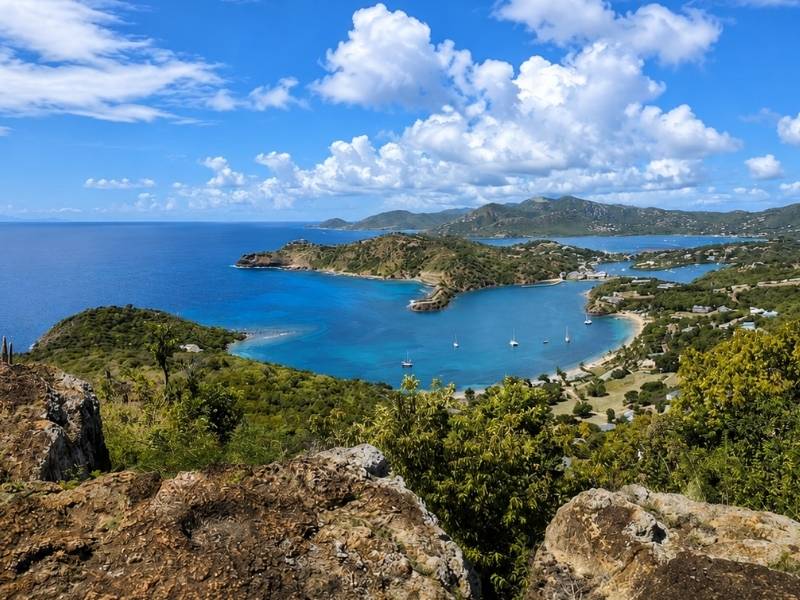
Superyachts worth more than most island homes sit moored against stone warehouses that Horatio Nelson knew by their smell of tar and sailcloth. That single view, old Georgian masonry on one side and modern rigging on the other, is why English Harbour still feels different from anywhere else in the Caribbean. It was a working Royal Navy base long before it was a postcard.
Booking Choice: Visit the Dockyard, Shirley Heights and Blockhouse, then spend an hour at Pigeon Point Beach. Check Dates: Dockyard History And Pigeon Point
Nelson's Dockyard is the heart of it, and it sits inside Nelson's Dockyard National Park on Antigua's sheltered south coast, a natural hurricane hole ringed by hills. Most visitors reach it on a half-day loop that ties the dockyard together with the lookouts above it. Here is what the site actually holds, how to see it, and how to slot it into a day without rushing.
English Harbour: a naval yard through the centuries
From a Georgian repair base to a living World Heritage harbour.
What Is Nelson's Dockyard, And Why Does It Matter?
Nelson's Dockyard is a fully restored 18th and 19th century Royal Navy repair base at English Harbour, Antigua, and the centrepiece of a national park. It is the only Georgian-era naval dockyard still in continuous use, and it anchors the site inscribed on the UNESCO World Heritage Site list in 2016 as the Antigua Naval Dockyard.
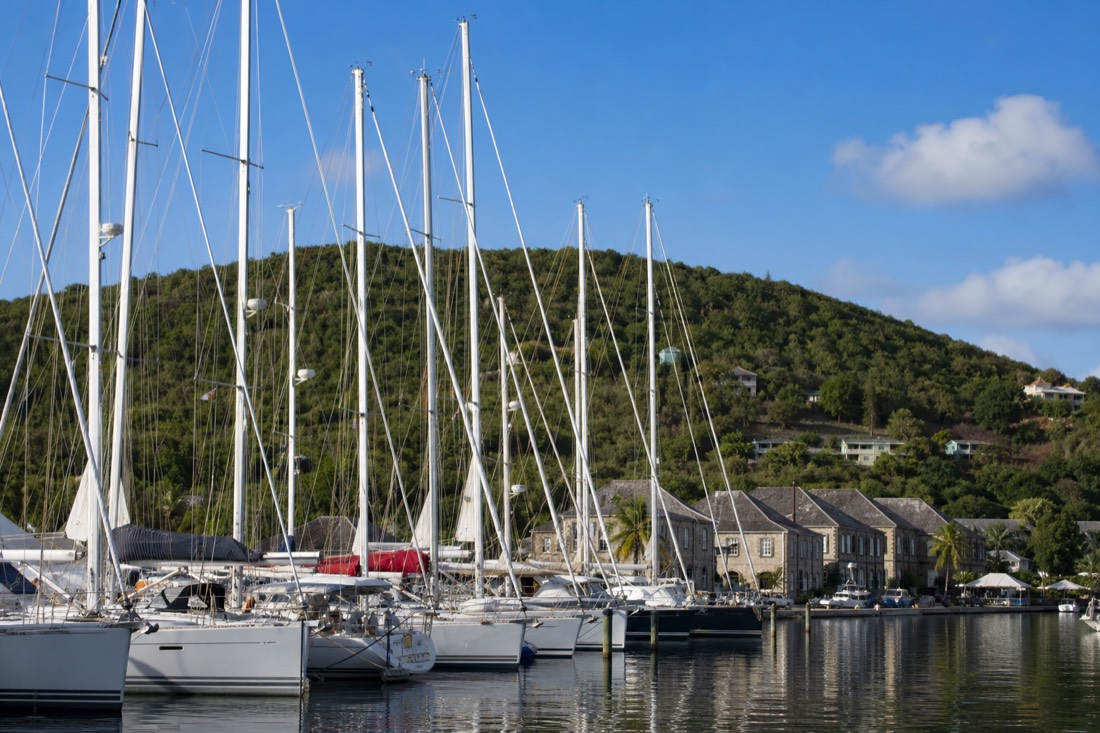
The harbour mattered for one blunt reason: geography. English Harbour is a deep, almost enclosed inlet, hard to see from open water and easy to defend, which made it the ideal place to careen, repair and shelter warships through the age of sail. Britain built a permanent yard here to keep its Caribbean fleet at sea. The stone buildings you walk past were pitch stores, sail lofts and officers' quarters, not decoration.
Today the whole area is protected and managed as a national park, and the dockyard buildings have been given new working lives as small hotels, a museum, bars and marina offices. That mix is the point. This is a living harbour where boats still come in for work and rest, not a roped-off ruin. The Antigua and Barbuda Tourism Authority lists it as one of the island's signature cultural sites, and it draws sailors, cruise passengers and history travellers in roughly equal measure.
What Can You Actually See Inside The Dockyard?
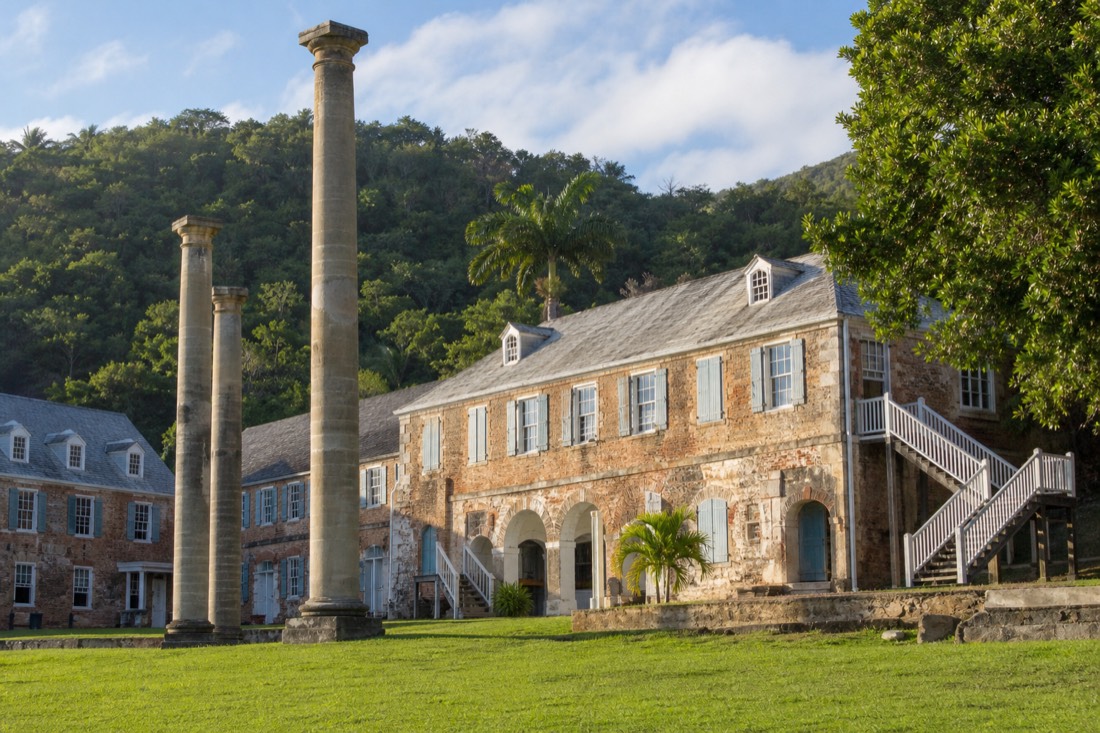
Inside the dockyard you can walk a compact set of restored Georgian buildings in under an hour: the Admiral's Inn, the Copper and Lumber Store, the Sailmaker's Loft, the Dockyard Museum in the old Admiral's House, and the row of stone Mystery Pillars that once carried a sail loft above the boats.
The buildings sit close together around the water, so a walk here is short on distance and long on detail. Guided tours built into a round-island day give the core loop about half an hour, which is enough for the highlights. Travellers who arrive under their own steam can easily stretch that to a slow hour or two with the museum, a drink and a wander along the quay.
| Building | What it was | Why it earns a stop |
|---|---|---|
| Admiral's Inn | Georgian pitch and turpentine store, later officers' rooms | Now a small hotel and bar; the stone facade and harbour terrace are the classic photo |
| Copper and Lumber Store | Naval store for sheet copper and ship timber | Restored around a courtyard, now a hotel; a good look at the yard's scale |
| Sailmaker's Loft | Where sails were cut, sewn and repaired | Shows the craft side of a working yard, not just the guns and ships |
| Dockyard Museum | The former Admiral's House | Maps, models and naval artefacts that make the ruins make sense |
| The Mystery Pillars | Stone columns that once held up a boat and sail loft | The most photographed relic; the upper timber floor is long gone |
Guides on the small-group round-island trip lead this exact circuit, pausing at the Admiral's Inn, the Copper and Lumber Store, the Sailmaker's Loft and the pillars before turning you loose for a few minutes by the moored yachts. If you like the sound of that structure, the half-day tour is covered further down.
How Do English Harbour And Falmouth Harbour Fit Together?
English Harbour and Falmouth Harbour are two neighbouring inlets on Antigua's south coast, a few minutes apart. Nelson's Dockyard sits inside English Harbour; larger Falmouth Harbour next door holds the bigger yacht anchorage. Galleon Beach, Freeman's Bay and the Pigeon Point sands are all within easy reach of both.
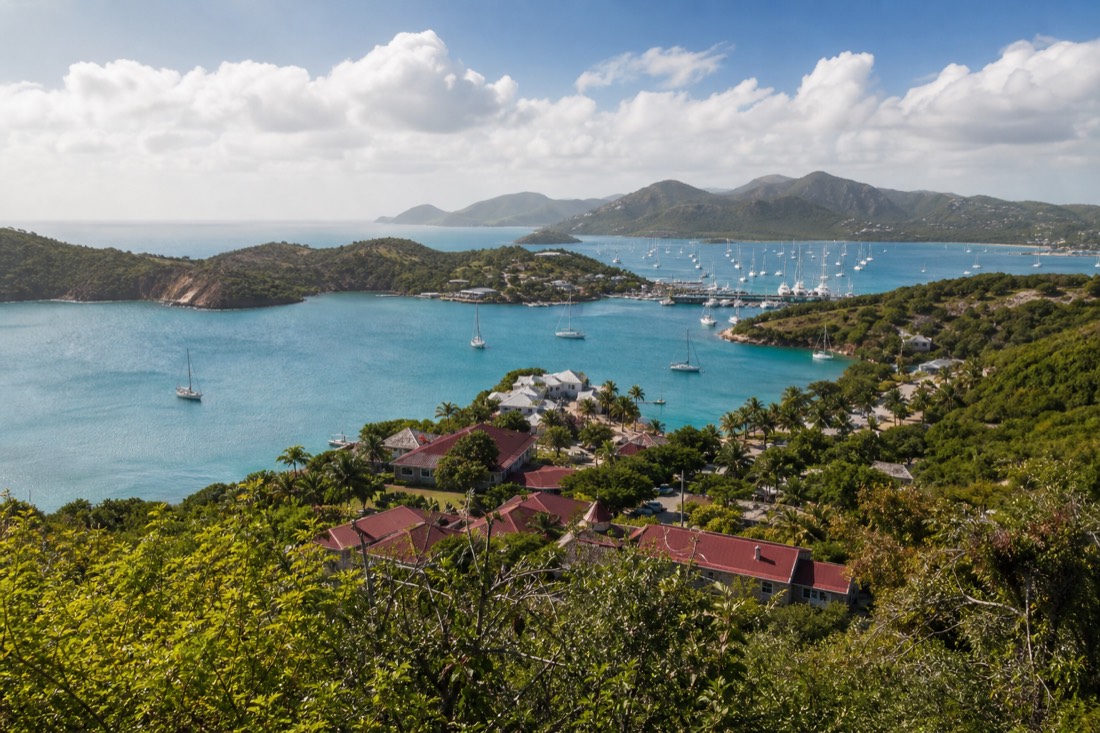
People use "English Harbour" loosely to mean the whole district, which causes confusion. In practice the dockyard is the historic core, Falmouth is the wide working marina where the biggest boats gather, and a handful of small swim beaches ring the edges. Knowing the difference helps you plan, because a dockyard visit, a swim and a sunset can all sit within a couple of square miles.
| Place | What is there | Good to know |
|---|---|---|
| Nelson's Dockyard | The restored Georgian yard, museum, bars, marina | The historic anchor of the national park; where the guided walks go |
| Falmouth Harbour | The larger yacht anchorage and marina next door | Where the superyachts berth; busiest in the winter sailing season |
| Galleon Beach | A calm swim beach across the harbour mouth | Visible from Shirley Heights; a short water taxi or drive from the dockyard |
| Freeman's Bay | Sheltered swimming inside the harbour entrance | Popular anchorage and snorkel spot near Galleon Beach |
| Pigeon Point | An easy sandy beach off Falmouth Harbour | Handy for a swim if you are basing yourself on the south coast |
What Else Is Worth Seeing Around English Harbour?
The dockyard is the centrepiece, but the land around it is stitched with short walks and swim spots. A shore trail leads to Fort Berkeley, the low battery guarding the harbour mouth. Across the water sit Galleon Beach and sheltered Freeman's Bay, while the towering Pillars of Hercules rise straight from the sea at the foot of the Shirley Heights cliffs.
Most visitors never leave the quay, which is a shame, because the best of English Harbour is the way the history, the geology and the swimming knit together in one small area. From the dockyard a flat, easy path runs out along the western arm of the harbour to Fort Berkeley, a small 18th-century battery set on a narrow spit that guarded the entrance, its cannon still pointing out to sea. It is about fifteen minutes each way, with ruined walls and a clean view back over the moored yachts at the far end.
Across the harbour mouth lie the swimming beaches. Galleon Beach is the calm, pale crescent you see from the Shirley Heights lookout, reachable by a short drive or a water taxi from the dockyard. Tucked just inside it, Freeman's Bay is a sheltered anchorage and a gentle snorkel spot. At the very foot of the cliffs stand the Pillars of Hercules, columns of layered limestone that wind and sea have carved into what looks like a row of giant organ pipes, best seen from the water or on a low-tide scramble around from Galleon Beach.
| Spot | What it is | How to reach it | Worth it for |
|---|---|---|---|
| Fort Berkeley | 18th-century battery guarding the harbour mouth | Flat walk of about 15 minutes from the dockyard | History and harbour views on foot |
| Galleon Beach | Calm pale-sand swim beach across the harbour | Short drive or water taxi | Swimming and the classic dockyard view |
| Freeman's Bay | Sheltered bay and anchorage inside the entrance | By Galleon Beach; short walk or boat | Gentle snorkeling and calm water |
| Pillars of Hercules | Weathered limestone rock columns at the cliff base | By boat, or a low-tide scramble from Galleon | Geology and photos from the sea |
| Pigeon Point | Easy sandy beach off Falmouth Harbour | Short drive from the dockyard | An unfussy swim near the marinas |
The Pillars double as a snorkeling site, a limestone wall with brain corals and a colonial-era anchor at its base, which is why the full-island powerboat trip anchors there. Our guide to the island's best snorkeling reefs covers how to swim it safely.
A Worked Half-Day At English Harbour
If you are exploring on your own, half a day covers English Harbour comfortably. A workable plan is the dockyard and museum first thing, a walk out to Fort Berkeley, a swim at Galleon Beach or Freeman's Bay, lunch at a dockyard restaurant, then the drive up to Shirley Heights for the late-afternoon view. Roughly four to five hours, unrushed.
The order matters mostly for heat and light. Do the walking and the museum while the morning is cool, save the swim for when the sun is high, and time the ridge for the softening light of late afternoon. If it is a Sunday, you can stretch the same plan into the evening and stay on for the Shirley Heights party. Everything below sits within a couple of square miles, so nothing here involves a long drive.
| Time | Stop | Roughly |
|---|---|---|
| Morning | Nelson's Dockyard grounds and the Dockyard Museum | 60 to 90 minutes |
| Late morning | Walk out to Fort Berkeley and back | About 45 minutes |
| Midday | Swim at Galleon Beach or Freeman's Bay | An hour or so |
| Early afternoon | Lunch at a dockyard restaurant | About an hour |
| Late afternoon | Drive up to Shirley Heights for the view | 45 minutes plus travel |
Prefer to let someone else handle the driving and the history? The guided round-island trip that walks you through the dockyard compresses the harbour into a slick 30-minute stop and adds the rest of the south coast.
When Is Nelson's Dockyard Open, And What Does Entry Involve?
Nelson's Dockyard is a national park and opens daily, typically from morning into the evening. Entry is a single modest park admission that also covers the Dockyard Museum, the Dow's Hill Interpretation Centre and, by day, the Shirley Heights lookout above it. Restaurants, shops and restrooms sit inside the gates. Budget one to two hours for a relaxed visit.
Because opening hours and the exact ticket price shift over time, treat any figure you read online as a planning allowance and confirm the current amount at the gate or with the Antigua and Barbuda Tourism Authority before you go. Children usually pay a reduced rate or nothing. If you arrive on an organised tour, the park admission is normally bundled into your fare, so you walk straight in.
One ticket, several sights: a standard national-park admission to Nelson's Dockyard also lets you into the Dockyard Museum, the Dow's Hill Interpretation Centre and up to the Shirley Heights lookout during daytime hours. The famous Sunday evening party at Shirley Heights is run separately and charged on its own.
| Detail | What to expect (confirm current) |
|---|---|
| Opening | Daily, typically morning through evening; the marina area is always alive |
| Entry | One national-park admission; a modest fee, reduced or free for children |
| Ticket covers | The dockyard grounds, the Dockyard Museum, the Dow's Hill Interpretation Centre and the daytime Shirley Heights lookout |
| On site | Restaurants and cafes, a couple of small hotels, gift shops, restrooms |
| Time needed | About 30 minutes on a guided loop; 1 to 2 hours at your own pace |
| Access | Mostly flat, walkable paths around the quay; the museum is a short set of steps |
How Does The Dockyard Fit Into A Round-Island Day?
The Round Island tour lists Nelson’s Dockyard, Shirley Heights and Devil’s Bridge. A Blockhouse stop is not confirmed on that product; the separately listed GetYourGuide heritage itinerary includes the ruins.
This is the efficient way to see the harbour if your time on the island is short. The operators we work with cap the group at around ten people and handle the driving, the entrance clearances and the history, so you spend your energy looking rather than parking. A morning start, usually around 09:00, has you back by early afternoon with the whole south coast covered.
| Stage | Stop | Roughly |
|---|---|---|
| Assembly | Hotel lobby or St. John's cruise-port pickup | From about 09:00 |
| East coast | Devil's Bridge National Park, the natural arch and blowholes | About 10 minutes |
| South coast | Nelson's Dockyard guided walking loop at English Harbour | About 30 minutes |
| The ridge | Blockhouse Ruins, cliff-edge Atlantic views toward Montserrat | A short pause |
| The lookout | Shirley Heights panorama over English Harbour and Galleon Beach | About 15 minutes |
| Return | Direct transfer back to resort or ship | 3.5 hours door to door |
The previously linked Salty Dogs UTV product is marked inactive in Viator’s current API. Do not treat it as a confirmed departure. For a self-drive experience on this shortlist, Reef Riders operates two-seat boats to Cades Reef, subject to its driver-age, passenger-age and combined-weight limits.
How Do You Get To English Harbour?
English Harbour sits about 45 minutes by road from St. John's and the cruise port, on the far south coast. You have four realistic ways in: a guided tour with pickup, a private taxi at island zone rates, a self-drive rental car remembering that Antigua drives on the left, or a cruise-line shore excursion booked through the ship.
There is no useful public transport for a visitor here, so the choice comes down to how much you want handled for you. A guided day is simplest because the fee, the fuel and the history all come as one package. A taxi gives flexibility but you should agree the fare before you set off, since island rates are set by zone rather than a meter.
| Option | From St. John's | Cost feel | Best for |
|---|---|---|---|
| Guided round-island tour | Pickup included, about 45 min transfer | Around $94 pp, park fees in (check live listing) | First-timers who want context and no logistics |
| Private taxi | About 45 min each way | Set island zone rate, agreed before you go | Couples or families wanting their own pace |
| Rental car | Self-drive, about 45 min | A day rate booked ahead, plus a local permit | Independent travellers happy to drive on the left |
| Cruise shore excursion | Coach from the pier | Priced above local booking | Cruise guests who want a guaranteed return to the ship |
Which Time Of Day Suits A Dockyard Visit Best?
Mid-morning is the sweet spot at Nelson's Dockyard: light is kind for photos, the heat is bearable, and the coach crowds have not yet stacked up. Late afternoon works well too, especially if you climb to the lookout for sunset. Midday is the hottest and busiest window, and Sunday evening brings the famous party crowd to the ridge above.
The judgement here comes from what our team sees week to week rather than any published figure. The harbour catches a steady trade breeze, so even in the heat of the day it rarely feels stifling by the water, but the walk up to the ridge is exposed. Plan the ridge for the cooler edges of the day and keep the shaded quay for the middle.
| When | Crowds | Feel | Best for |
|---|---|---|---|
| Early / mid-morning | Light | Cooler, soft light | Photos and an unhurried museum visit |
| Midday | Heaviest | Hot, bright, busy | Lunch in the shade at a dockyard restaurant |
| Late afternoon | Easing | Golden light, cooling | The harbour walk, then the ridge for sunset |
| Sunday evening | Busy on the ridge | Party atmosphere above | The Shirley Heights sunset party, charged separately |
If sunset is your target, read up on the Sunday sunset party up at Shirley Heights before you go, because it changes how you time the whole afternoon.
The Georgian Buildings And The Officers Who Used Them
The stone yard you walk today took shape as a Royal Navy repair base during the 18th century. Its most famous resident was a young captain, Horatio Nelson, who was stationed at English Harbour from 1784 to 1787. The Navy finally closed the working dockyard in 1889, and a restoration effort reopened it as a heritage site in 1961.
Nelson's own years here were not happy ones. He arrived to enforce unpopular trade laws on colonial merchants, which made him few friends locally, and the harbour's reputation for fever did the rest. His name stuck to the place anyway, long after he left to find his fame elsewhere. The buildings around you outlasted him by well over a century of naval use.
When steam replaced sail and bigger ships needed deeper ports, the yard lost its purpose and was shut. Decades of neglect followed until local volunteers, the Friends of English Harbour, drove the restoration that brought the site back to life. That work is why the masonry stands square today rather than as rubble, and why the harbour reads as a coherent Georgian yard rather than a scatter of foundations.
The individual buildings still tell you what a Georgian yard actually needed. The Copper and Lumber Store held exactly that: sheets of copper to sheath hulls against the shipworm that ate wooden bottoms, and the seasoned timber for repairs, all now rebuilt around a shaded inner courtyard as a hotel. The old Admiral's House, set slightly apart from the working quay, is the Dockyard Museum today, its rooms filled with maps, models and salvaged fittings. And the row of stone Mystery Pillars once carried the upper floor of a boat and sail loft, where sailmakers cut and stitched canvas above the water; the timber loft is long gone, but the columns that held it still stand in a neat line by the quay.
Why Is English Harbour Still A Sailing Capital?
English Harbour never stopped being a working port. The same deep, protected water that sheltered the Royal Navy now makes it one of the Caribbean's great yachting centres, busiest from December to April. The winter season peaks with two back-to-back April regattas: the Antigua Classic Yacht Regatta and, straight after it, the world-famous Antigua Sailing Week.
Walk the dockyard in the high season and the superyachts moored stern-to along the old stone quay are the first thing you notice. Antigua's south coast draws the international sailing fleet because the harbours are deep, sheltered and beautiful, and the trade winds that blow hardest from December through spring deliver near-perfect racing conditions. That is the modern echo of exactly why the Navy chose the spot.
The calendar builds to a spring climax. The Antigua Classic Yacht Regatta fills the harbour with restored wooden sailing yachts in mid-to-late April, and Antigua Sailing Week follows immediately after in late April, one of the oldest and largest regattas in the Caribbean. If you want the harbour at its liveliest, that is the window; if you want it quiet, avoid it, because south-coast rooms grow scarce and pricey. For how the seasons shape prices and crowds, our guide to planning around Antigua's weather and events calendar lays out the year.
| Season | On the water | Effect on the harbour |
|---|---|---|
| December to March | Superyacht season, cruising fleet arrives | Quay lined with big boats; lively but not packed |
| Mid-to-late April | Antigua Classic Yacht Regatta | Harbour fills with restored wooden yachts |
| Late April | Antigua Sailing Week | Peak crowds; south-coast rooms scarce and pricey |
| June to November | Quiet, storm season | Fewest boats; the calmest time to visit the yard |
Who Should Visit, And Who Might Skip It?
Anyone with an interest in history, sailing or handsome old architecture will find English Harbour a highlight. Photographers and slow travellers get the most from it. If you came to Antigua purely to lie on a beach and have no pull toward heritage sites, a 30-minute stop on a wider tour will suit you better than a dedicated half-day here.
Families do well because the site is compact, walkable and edged with places to eat and swim nearby. Sailors treat it as a pilgrimage. The one group that sometimes leaves flat is the pure sun-seeker who expected a beach and found a working marina, so set expectations: this is a cultural stop with water views, not a swimming beach in its own right.
For a broader sense of how the harbour ranks against the rest of the island, our roundup of the best things to do across Antigua puts it in context alongside the beaches, the reefs and the boat trips.
Pairing The Dockyard With Shirley Heights And The South Coast
The natural pairing is Nelson's Dockyard by day and the ridge above it for sunset. From the dockyard you can climb to the Blockhouse Ruins and Shirley Heights for the classic view straight down onto English Harbour, then time your visit to catch the sun going down over the yachts.
The south coast rewards a full day if you have one. Add a swim at Galleon Beach or Freeman's Bay, a lunch at one of the dockyard restaurants, and the ridge lookout, and you have a rounded day without ever driving far. It is one of the few corners of Antigua where history, a swim and a sunset all sit within a short walk or water-taxi hop.
Ready to build the harbour into your trip? A well-run guided day is the easiest way to see it, and our island-tour homepage lists the small-group Antigua tours that cover this stretch of coast. If you prefer to plan your own route, our advice on the best time of year to visit Antigua will help you pick the calmest season, and you can always book an Antigua island tour once your dates are set. For the wilder counterpart across the island, the wave-blasted arch at Devil's Bridge makes a fine contrast to the polished stone of the yard, and plenty of guided day tours around the island string the two together.